Everything comes back to Economics
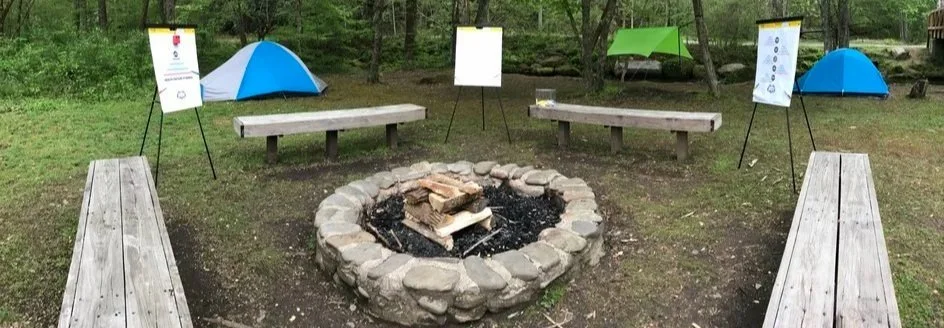
Years ago, we hosted an event called Launch Camp, a wilderness retreat for Entrepreneur Support Organization leaders.
I was setting up to present the concept of a community health pyramid, focused on entrepreneurship and the social determinants of health as the foundation. The idea was simple: healthy communities aren’t possible without investing in entrepreneurs at the base.
Vahe Heboyan took one look and said, “Everything comes back to economics.”
He has a PhD in Applied Economics and leads the Health and Behavioral Economics Research Lab at Augusta University. At the time, all I heard was someone making the case that their field was the central way of understanding how the world works.
As an architect, I wasn’t much different. I was making the same claim, just with a different model.
We were talking past each other while saying essentially the same thing.
Over time, as our work continued to overlap, I’ve come to understand what he meant.
As Vahe describes it, economics isn’t just about money. It’s about how we use what we have. Time. Skills. Experience. Resources. Every individual, every organization, every community is making those decisions every day.
I started to see this more clearly in a recent cohort of entrepreneurs navigating recovery in Northeast Georgia.
Many of the participants had years of experience in their trade. Electricians. Mechanics. People who knew their craft well enough to make a living from it.
But when Vahe asked a simple question, the room stalled:
How do you price your work?
As he put it later, “I would ask very basic questions… what’s your pricing mechanism? And many people couldn’t answer that question.”
Not because they lacked skill. Most of them were already doing the work in some form. Helping friends. Taking on occasional jobs. Fixing things when they were needed.
But there wasn’t a clear way to translate that into consistent income.
Even though they were experienced, Vahe pointed out that many “fail to properly understand… things that are vital for the success of the business.”
Pricing. Cost. Time. Trade-offs.
These small things add up quickly for entrepreneurs starting without capital support systems.
And mastering economics is usually the difference between basic survival and building a true business.
One consistency in our work is that every single entrepreneur, without fail, will embrace talking about their idea, their customer, their marketing strategy. However, these same founders typically cringe when it’s time to dive into Unit Economics. It’s unfortunate, because when people start to break down their pricing in terms of time and cost, the lightbulb moments really happen.
What feels like a viable business often turns out to be something closer to a below-poverty hourly wage once everything is accounted for.
That realization can go one of two ways. Either it shuts people down, or it forces a different kind of thinking.
What needs to change? Pricing? Positioning? The type of work being taken on?
That’s when the second shift happens. When founders finally understand how to define the real problem they are solving for customers, they move from pricing based on what feels reasonable, to pricing based on the value being delivered.
And that really takes me back to the argument about what value those of us in Entrepreneur Support are creating.
Our first major break as an organization came through the Robert Wood Johnson Foundation grant that led to Vahe and I talking about health pyramids and economics around a campfire in the mountains.
At the time, I was thinking about these problems as an architect. How systems are structured. How people, ideas, and resources move through them.
For our grant, we proposed a different way of organizing economic activity across communities. Not as isolated efforts, and not through centralized hubs, but as a connected network.
The idea was to move from a hub-and-spoke model, where value concentrates at the center, to a mesh network, where each node has the ability to connect directly to others. I tend to think visually, so it showed up as a structural solution to what is ultimately an economic problem.
In a traditional hub-and-spoke system, access outside the innovation hub is limited. Information, capital, and opportunity tend to flow toward a central point. Economic inclusion depends on proximity to that center.
In a mesh network, the dynamics change. Each node becomes a point of connection. The number of possible interactions increases. The pathways for value creation expand.
The result isn’t just more activity. It’s a different distribution of resources and opportunity.
That’s where the idea behind #BeTheNode truly began to take shape.
It’s not just about starting a business. Or joining a program. Or accessing a specific resource.
It’s about creating a standard language that allows nodes to collaborate. It’s about making it possible to become an active participant in the network itself. Someone who can create, connect, and exchange value.
From an economic perspective, that changes the equation. And it starts to explain why the same patterns show up in places where the stakes are much higher.
In the recovery communities we’ve been supporting with Vahe and his team, this isn’t theoretical.
Many of the individuals have the skills to work. Some have years of experience. But access to traditional employment is inconsistent. Background checks. Gaps in work history. Stigma. Without a clear path to generate income, options narrow and stability becomes harder for anyone to maintain. The system becomes harder to re-enter. The risk of falling back towards the past increases.
And this is where the mesh network becomes more than a concept. Common language creates credentialing. Credentialing unlocks access to capital and opportunity. Regardless of where someone starts, they can plug into a network where they have a fair shot.
Maybe it’s the grey hairs that have emerged since Launch Camp, but these days I’m grateful to work through ideas across different frames.
Ten years ago, I wanted to prove that an architectural approach could reshape the world.
Today, I’m more interested in something simpler.
Helping the people who have been discounted by the hubs succeed as entrepreneurs.
And to do that, we need as many perspectives as we can get.