Solving the Founder Credibility Problem
It was August 2023 when we received this email:
Hello everyone. I know how anxious everyone is, and I’m so sorry this is a day late.
We had a very difficult time selecting companies this year. Unfortunately, your company was not chosen. We had a record number of applications and only have a limited amount of slots.
I would highly encourage all of you to still attend the event. Simply go to our website, click on Register and you can purchase a founder ticket for $300.. tickets are running out and will not be available in a few weeks.
We so appreciate you applying and wish you continued success! We will open apps for our 2024 event in late April.
Thanks!
We had developed an MVP of our pitch feedback app in April and officially formed the company in June. It would be two more months of development and testing before our beta release, and another month at best before we could go to market.
Our vision was to develop a new trust model for startup funding by integrating training, planning, operations, and funding into a single platform.
We convinced friends to invest $90,000 and took out a $200,000 line of credit so our team of six could take CofounderOS to market. There was enough money in the bank to get to January, and in the best case, our product would not be live until November.
Raising capital was becoming a full-time job. Without it, we would have to let our team go, tell our friends we lost their money, and still carry a $200,000 loan to repay.
Like most founders, in this moment,
We were All In.
And emails like this were the only response we could get.
So what did the email really say?
It was boilerplate, and it was late. But more than that, it wasn’t just a no. It was a signal of a system that was overwhelmed, with too many applications and too few slots.
Worse, it was monetizing that imbalance by converting desperate founders into customers.
Despite our initial disappointment, this email became a gift. It revealed the system failure that entrepreneurs operate within in America.
Over 5 million new businesses start each year. Only about 25,000 receive venture capital, and half of that is concentrated in California.
If we’re going to fix this system, we have to understand what it is built on.
That thing is trust.
Trust is something we build every day. As social creatures, it’s fundamental to how we interact.
Once we build trust with one person, they can vouch for us to others. This allows us to form small groups that rely on one another for all kinds of needs.
We can also build trust in group settings through a stage or through media. One person can convey ideas and make a convincing case to a broader audience. Often this trust is thinner, but with time and consistency, it allows for a first order of trust scaling.
But it is still limited.
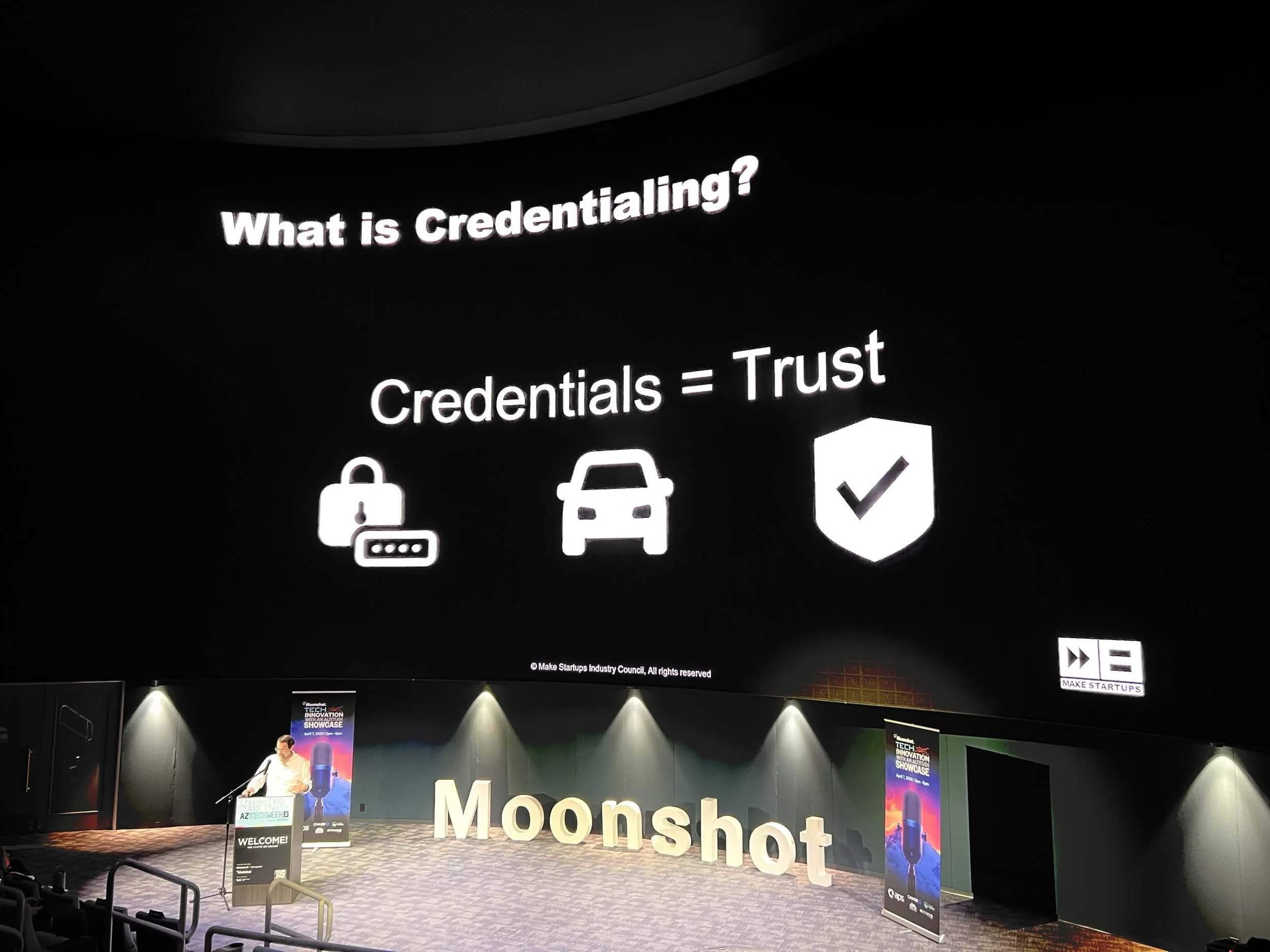
Credentials are the technology we have developed to scale trust relationships and extend them beyond our personal human networks. We use them every day, for
Identification (Website login, Passport)
Standards Verification (Drivers License, Academic degree. Professional Certification)
Credentials are institutionally granted verifications that a minimum standard has been met to establish trust. We are in essence, placing our trust in the institutions that confer the credential to uphold a standard of care.
The best credentialing systems provide transparency so that people can understand their requirements and navigate them so that they can earn the credentials they need.
For startups, there are two primary pathways to access capital, each with its own way of verifying founder credibility and establishing trust.
First, there are banks.
Banks provide debt-based funding, allowing someone to access capital today and repay it over time with interest.
They determine risk based primarily on two factors: your credit history and your available assets. In simple terms, they are asking whether you have a track record of repayment and whether you have enough assets to cover the loan if things go wrong.
If you’ve faced financial difficulties or lack assets to leverage, building that credibility can be a challenge.
In most cases, including the bulk of SBA loans, a business isn’t even eligible until it has been operating for at least two years.
Simply put, if you don’t have assets or history, you’re locked out.
After banks, there is Venture Capital.
VCs provide high-risk capital in exchange for ownership in a business. Because many of these investments fail, the ones that succeed must generate outsized returns, typically through an exit where the company is acquired or goes public.
That requirement drives where venture capital operates.
Exits don’t happen everywhere. They depend on dense networks of capital, talent, and acquirers. As a result, venture capital concentrates in the markets where that infrastructure already exists.
This concentration is further intensified by what’s often described as Actor-Network Theory: credibility comes from networks. If a startup is referred by someone you trust, it is far more likely to be perceived as credible than one coming from outside that network.
Together, these dynamics explain why capital concentrates in specific hubs.
It’s not that investors aren’t interested in funding your company, it’s that we lack a scalable means of conveying trust.
In short, what we lack is a recognized credential
A scalable way to establish founder credibility that isn’t dependent on assets, geography, or network proximity.
That’s the gap we set out to address.
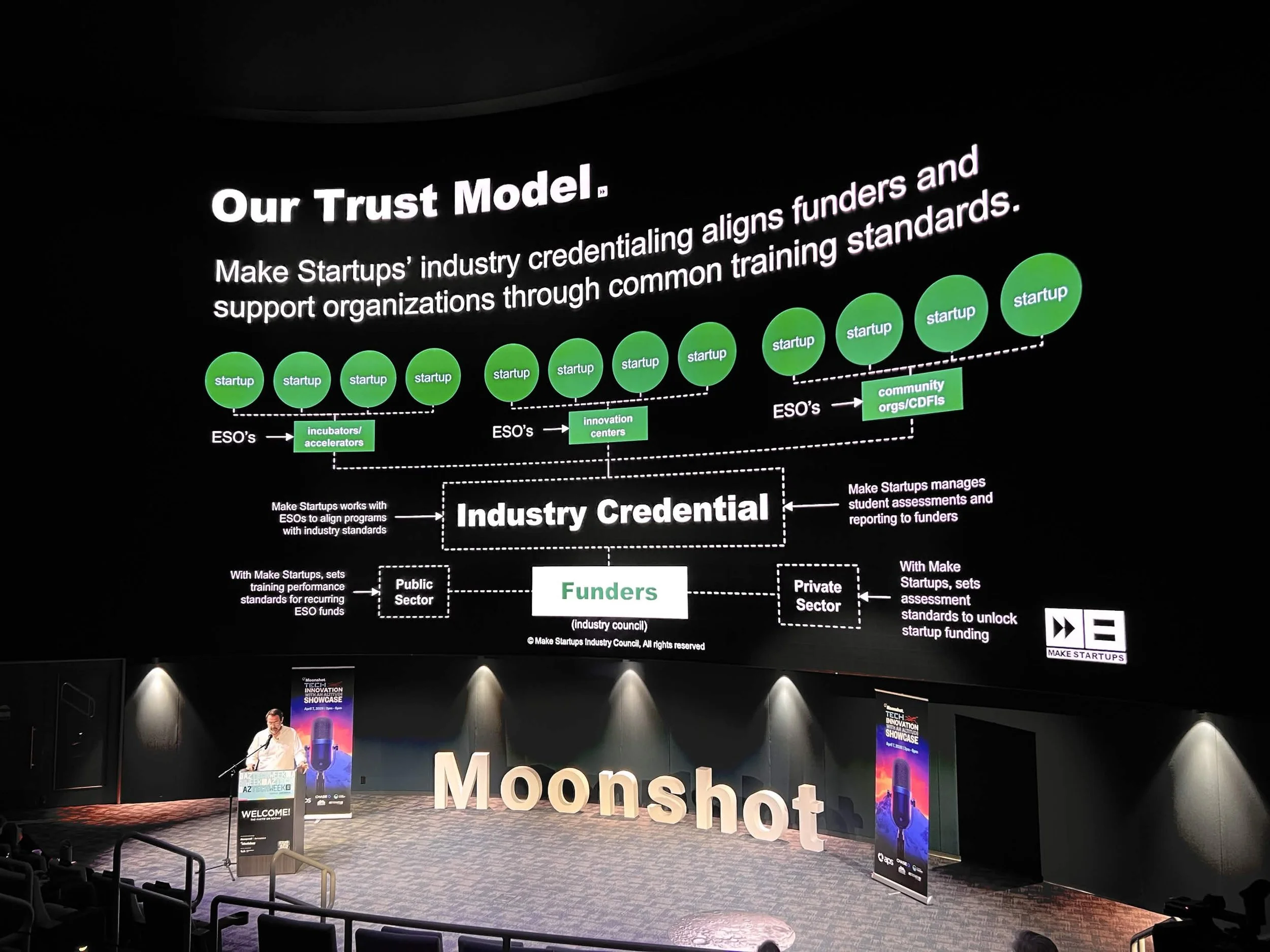
We partner with capital providers and entrepreneur support organizations to establish measurable standards for founder credibility.
But there’s a key problem. Founders are busy. As we said, they are All In.
As a result, we can’t create a parallel academic examination process without distracting founders from the realities of launching their business. So instead, we integrate applied skills assessments directly into the business planning process. These assessments function like AI-driven workshops that stress test a business across eight core parameters we’ve refined over 15 years.
This allows us to focus on the underlying business logic. We build independent data models for every startup and provide structured, real-time feedback across industries.
This isn’t an AI agent trained on historical data and released as a chatbot coach. We built an intelligent operating system to test and support startup logic.
Everyone else is guessing. We are testing.
Our initial models were built by our team and partners. Over time, machine learning will continue to refine them. But the results already speak for themselves:
We’ve performed over 11,000 founder evaluations.
Over 70% of founders report revenue growth within 90 days of earning their Launch Ready Credential.
We’ve also documented a 4:1 private match of public dollars. For every $1,000 spent on entrepreneur training, the private sector has invested $4,000 into credentialed startups.
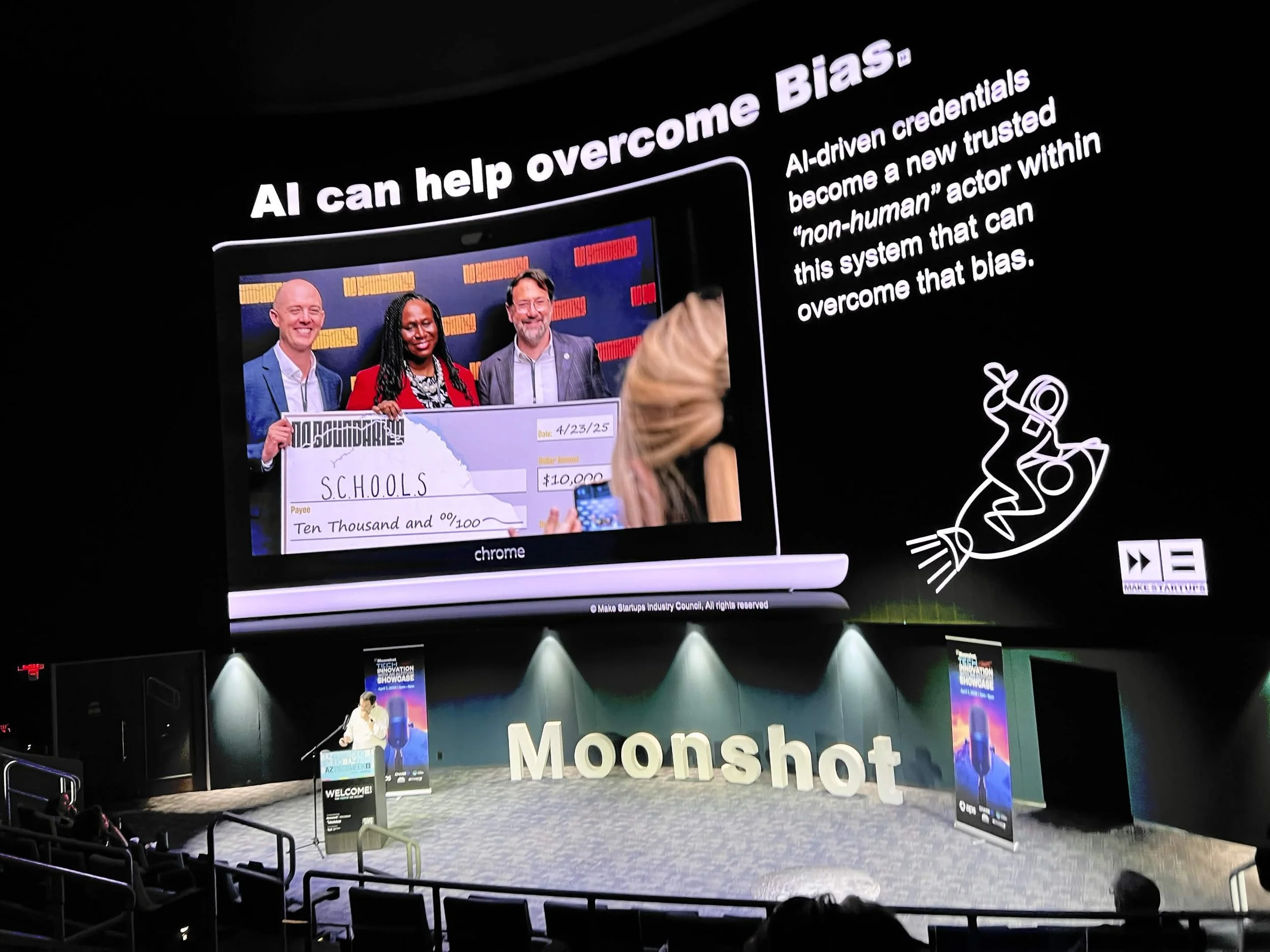
We also see that AI is helping overcome bias inherent within networks.
To test this, we ran a pitch competition where every application was scored by our AI. At the same time, investors followed their standard selection process, overruling the AI in about half the cases.
What happened when we brought the founders on stage to pitch?
Every single winner came from the AI-selected group. Not the human-selected finalists.
Based on that, this spring we launched our first in-platform fund, investing in founders based entirely on AI-driven credential attainment.
So while we still have work to do, one thing has already changed.
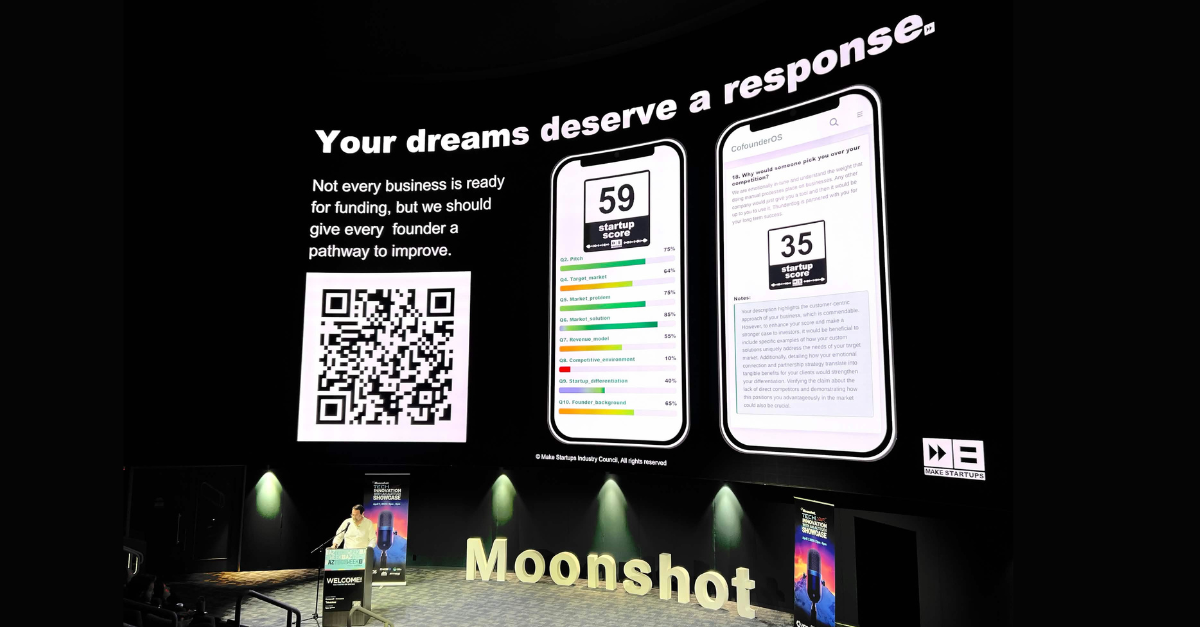
The experience for founders no longer has to be silence.
We can now evaluate applications at scale and provide timely, structured responses. Not just a yes or a no, but clear feedback on strengths, areas for improvement, and pathways forward.
Because when someone starts a business, they are putting everything on the line to pursue something that doesn’t exist yet.
If we are going to ask founders to take that kind of risk, we need a system that not only responds, but provides clear pathways forward.
Credentialing is a solution that only works when those of us in entrepreneur support choose to adopt shared standards.
Today, the standards and technology exist to solve the founder credibility problem.
The question is whether we are ready to work together to implement them.
#BeTheNode