
Maybe Our Programs Aren’t the Problem
Ideas Worth Championing, Part 2
We all support founders. Of course we argue for founder-friendly approaches. But in that evangelism, we often leave out the most important argument. Two stories help explain why.
“She’d been surviving for a couple years. She’d made it past the three-year mark, the dreaded three years when most small businesses tend to fail.”
The business was a small cafe, tucked into a neighborhood near her home. It worked. Customers came. So she did what any reasonable owner would do next.
“We live in a southern state. It’s really nice. People like to eat and drink coffee outside. I’m going to put in some picnic tables.”
Before doing anything, she called the city.
“Hey, do I need any permits or anything like that?”
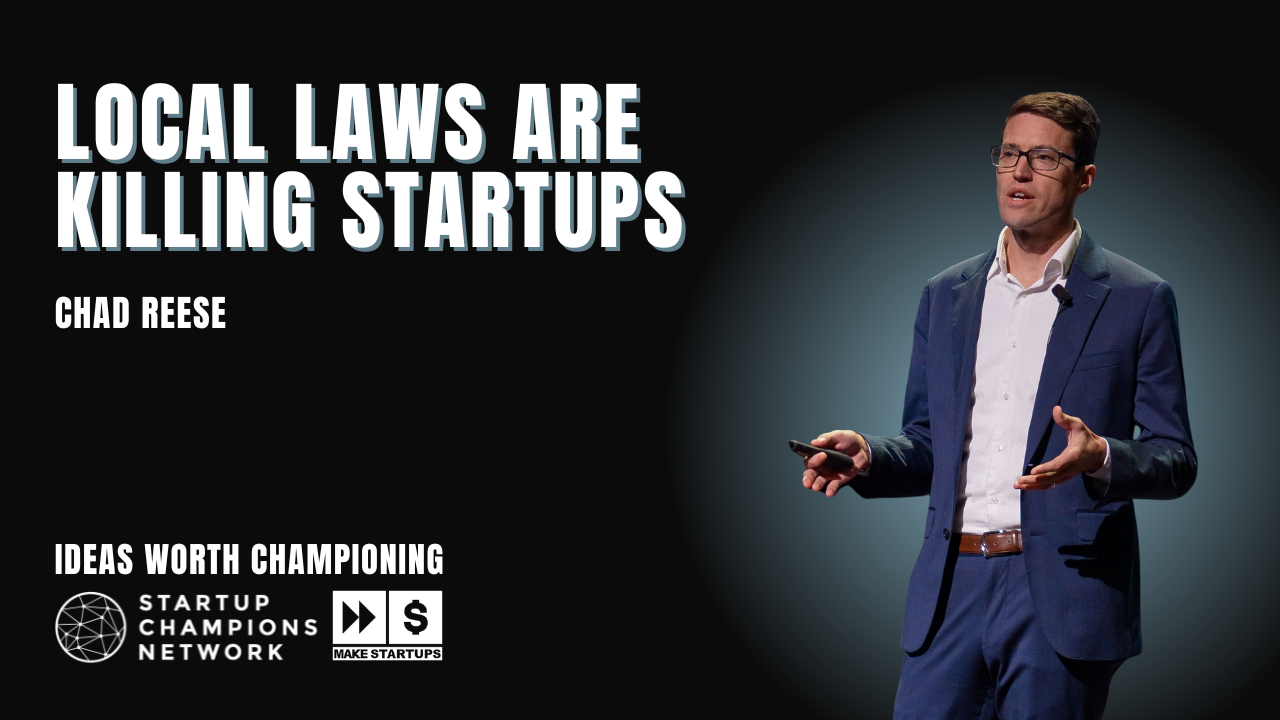
“That’s when she heard the three most terrifying words an entrepreneur can hear,” Chad Reese said. “Mandatory parking minimums.”
By adding a few picnic tables, the cafe crossed an invisible line. “She was technically launching herself into a new occupancy category,” he explained, “and she was going to have to basically double the size of her parking lot.”
Doubling a parking lot was not a detail to work around. “For anyone who owns a business,” Reese said, “you know that just doubling the size of your parking lot is not really an option.
Nothing about the business had failed. Demand existed. The owner had done what the system asks founders to do: survive the early years, listen to customers, grow carefully. The problem appeared only when growth collided with rules that had not been designed to accommodate it.
“In this woman’s situation,” Chad shared, “local policy was not working for entrepreneurs. Local policy was working directly against her desire and ability to grow.”
Click to Watch
This isn’t just about one cafe. It exposes how institutions that claim to support founders often end up organizing around their own processes instead.
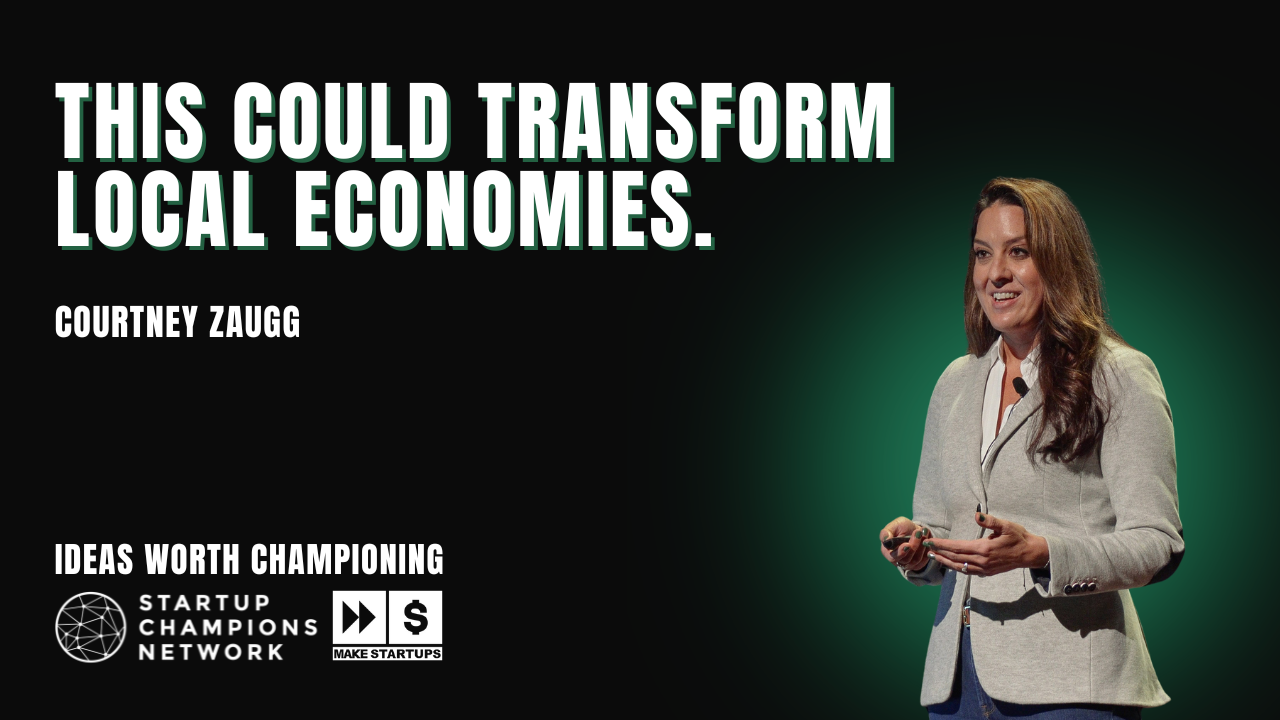
Courtney Zaugg has spent years noticing what happens before a founder ever reaches a moment like this, particularly among veterans and military spouses leaving highly structured institutions and stepping into entrepreneurial ecosystems that offer little translation. The calls come quietly.
“Hey, can you help me?” she recalls hearing again and again. “I’m thinking about starting a business, but I don’t even know where to start. Do I need an attorney? How do you find customers? Who do I even call?”
“These weren’t people lacking skills,” Courtney says. “These were highly trained leaders with systems thinking expertise, crisis management, and operational excellence.”
What Courtney began to see was not confusion, but misdirection. Veterans were being funneled into a narrow set of “appropriate” post-service paths, what she describes as a protector pipeline. Law enforcement. Security. Roles that mirrored the last uniform they wore. Entrepreneurship, the trades, and ownership were rarely named as options at all.
“When my husband transitioned out,” she says, “entrepreneurship or the trades were never mentioned.” It took more than a decade for him to find a viable path into business ownership, not because the capability wasn’t there, but because the ecosystem never surfaced it as a possibility.
Click to Watch
Military spouses are hit even harder. Despite high levels of education and adaptability, they experience unemployment rates that hover around twenty-four percent. They are experts in contingency planning, frequent relocation, and operating under uncertainty. The skills are there. The pathway is not.
Courtney is careful about how she names the problem. “This was not a veteran problem,” she says. “This was an ecosystem failure.”
Taken together, Courtney and Chad are describing the same failure at different points in the journey.
Courtney sees it at the front door, where capable people are filtered out before they are ever recognized as entrepreneurs. Chad sees it later, when businesses already exist and attempt to grow.
“What if on top of access to capital,” Chad asks, “you also have to deal with permit fee after permit fee, or zoning codes that don’t even allow for the kind of business you’re trying to build?” In those moments, growth itself becomes a liability. “The point,” he says, “is cheaper, faster, and simpler, so businesses don’t have to make the city they want to live and work in the enemy.”
What links these failures is not a lack of effort by founders, but a shared assumption embedded across programs and policies. Entrepreneurship is still treated as a byproduct, not a core economic strategy. When that happens, communities underinvest in the conditions that allow companies to form, survive, and scale locally.
The cost of that underinvestment is rarely visible through a single failed startup. It shows up over time.
Fewer locally owned employers.
Fewer essential services rooted in community needs.
Fewer businesses capable of hiring veterans, military spouses, and other underestimated workers who already live there.
Courtney and Chad are not arguing for more programs or better intentions. They are exposing what happens when ecosystems organize around process, compliance, and metrics instead of people and outcomes. When that happens, we do not just fail founders. We weaken the very economies and communities our strategies are meant to strengthen.
For a field that often struggles to communicate its value beyond itself, their work also points toward something more fundamental: the need for a shared language that makes these failures legible to economic developers, policymakers, and communities, and that builds the support required to remove barriers rather than manage around them.
The question is no longer whether we can design programs to support entrepreneurs, but whether we can come together to drive the systems change that allows them to become the companies our communities need.
If your community is running strong programs but still watching founders stall at key moments, we should talk.
Make Startups partners with cities, regions, and entrepreneur support organizations to uncover structural barriers, redesign local systems, and build data-driven pathways that help companies start, grow, and scale locally.