Ideas Worth Championing, Part 3
What exactly is our legacy?
This is a question that will arrive for anyone after experiencing enough seasons in this work. Startups force us to confront the tension between serving others and serving our own ambitions. Who hasn’t, at some point, felt the intoxication of success? It’s exciting to be the star of your own hero arc. But that pull can separate us from the founders we support, the communities we serve, and the families living alongside our achievements.
In our final Ideas Worth Championing article, we’ll explore two stories that speak to this idea of legacy. At the center are two big questions.
What are we here to do?
And
How do we build the models to do it?
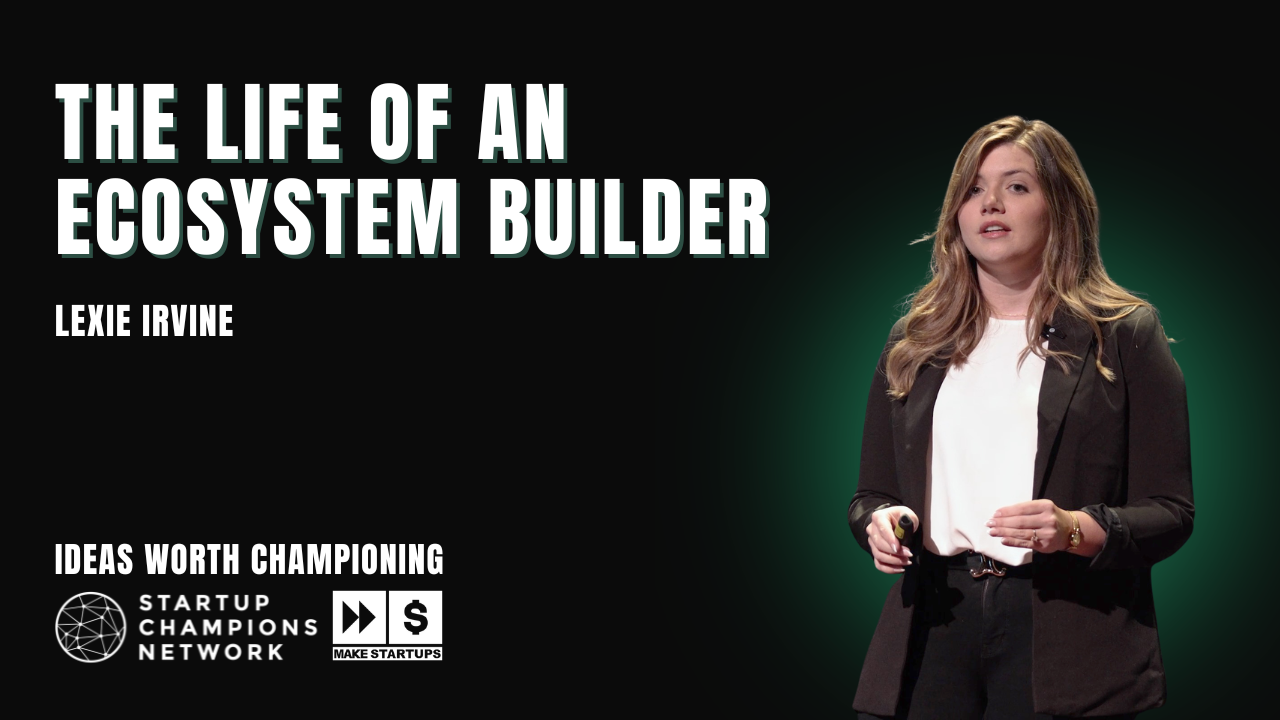
Lexie did not enter this work for recognition. She came into this work as a college intern who had never even heard of “ecosystem building”. She was simply looking for experience. That absence of assumptions gave her a rare vantage point, one many of us took years to earn.
She describes ecosystem building as “holding space for other people to win.” The work is relational. It is showing up early, staying late, answering the call when someone says, “Can you just help me think this through?”
It rarely comes with headlines.
“Most of what we do,” she says, “nobody sees.” The meetings that don’t make the report. The introductions that never get credited. The emotional labor of absorbing someone else’s doubt so they can keep moving.
When people begin to feel exhausted, the story often becomes personal. You’re not resilient enough. You need better boundaries. You need to manage your energy.
Lexie sees it differently.
“If burnout keeps showing up,” she says, “that’s information.”
Not about character. About design.
Protecting peace, she explains, is not selfish. It is structural. If the system requires constant personal sacrifice to function, it is not sustainable. It is extractive.
Many ecosystem builders start with belief. They believe in founders. They believe in access. They believe in local transformation. Belief is abundant in this field.
What is less abundant is infrastructure that assumes the people doing this work are human.
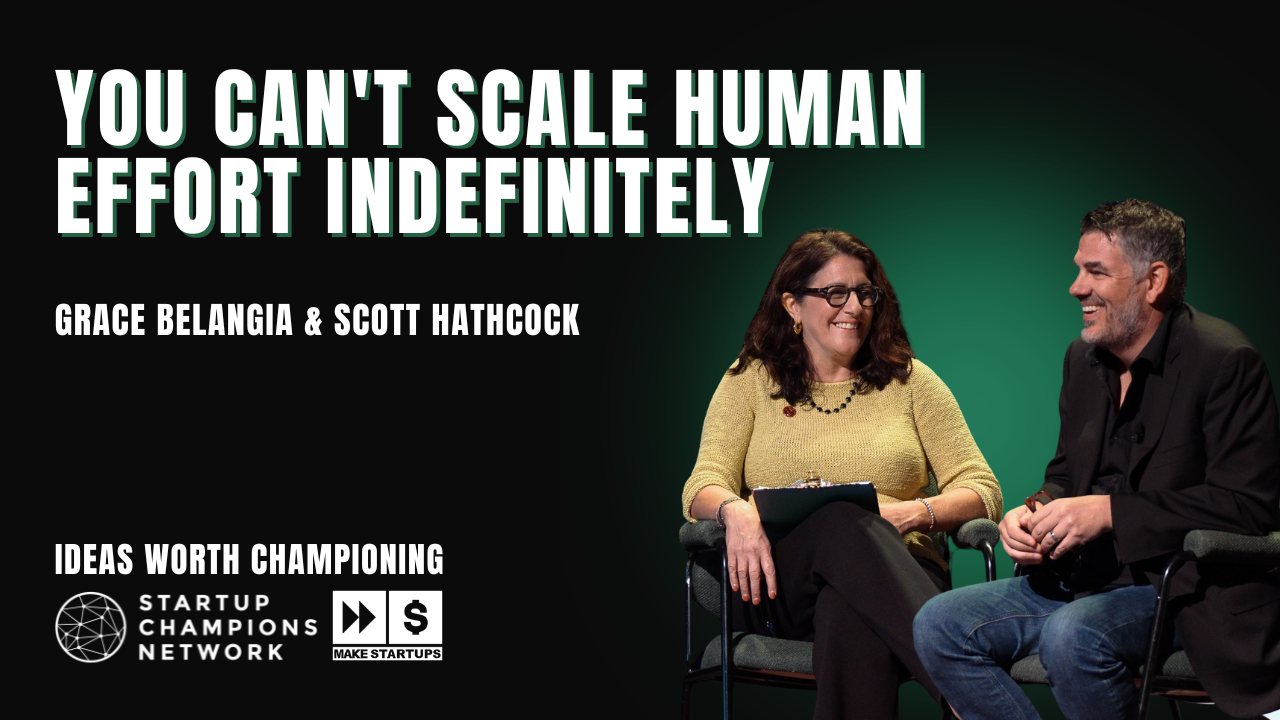
Scott talks about the moment you realize the model itself is the problem. Not the people. Not the mission. The model.
“You can’t scale human effort indefinitely,” he says. “At some point you either redesign the structure, or the structure redesigns you.”
That’s the pivot.
The shift didn’t begin with inspiration. It began with constraint. Geography limited reach. Funding cycles limited planning. The same handful of people kept absorbing the weight.
So the questions changed.
Not “How do we get through this year?” but “What would make this durable?” Not “Who can carry more?” but “What would make carrying less possible?”
Platforms weren’t built because technology was exciting. They were built because proximity was limiting. Storytelling wasn’t branding. It was how you moved beyond the few people in the room toward scalable systems of trust.
Business model shifts didn’t start as strategy. They started as necessity.
Ecosystem building does not end with a ribbon cutting or a cohort graduation. Those are milestones. The real work is quieter: the transfer of knowledge, the preservation of culture, the handoff of responsibility, and the governance structures that protect the mission from the volatility of individual arcs.
If we are honest, most of us have felt the pull to be indispensable. That's ego seeking its own legacy, preventing us from building the systems that sustain and grow the ecosystem beyond it.'
In the end, legacy isn’t about spaces, buildings, or accolades. These physical objects are an illusion of permanence. Legacy is measured by the lives we change and by the systems that position this work to sustain and grow.
Click to Watch
Click to Watch
Ready to build something that lasts?
Make Startups partners with communities and ESOs to design sustainable, scalable systems for entrepreneur support. Connect with us to start the conversation.