Who Funds Dignity?
There are some stories you don’t feel qualified to write. All you can do is witness them
I have spent more than a decade championing entrepreneurship as a pathway to personal economic mobility and regional vitality.
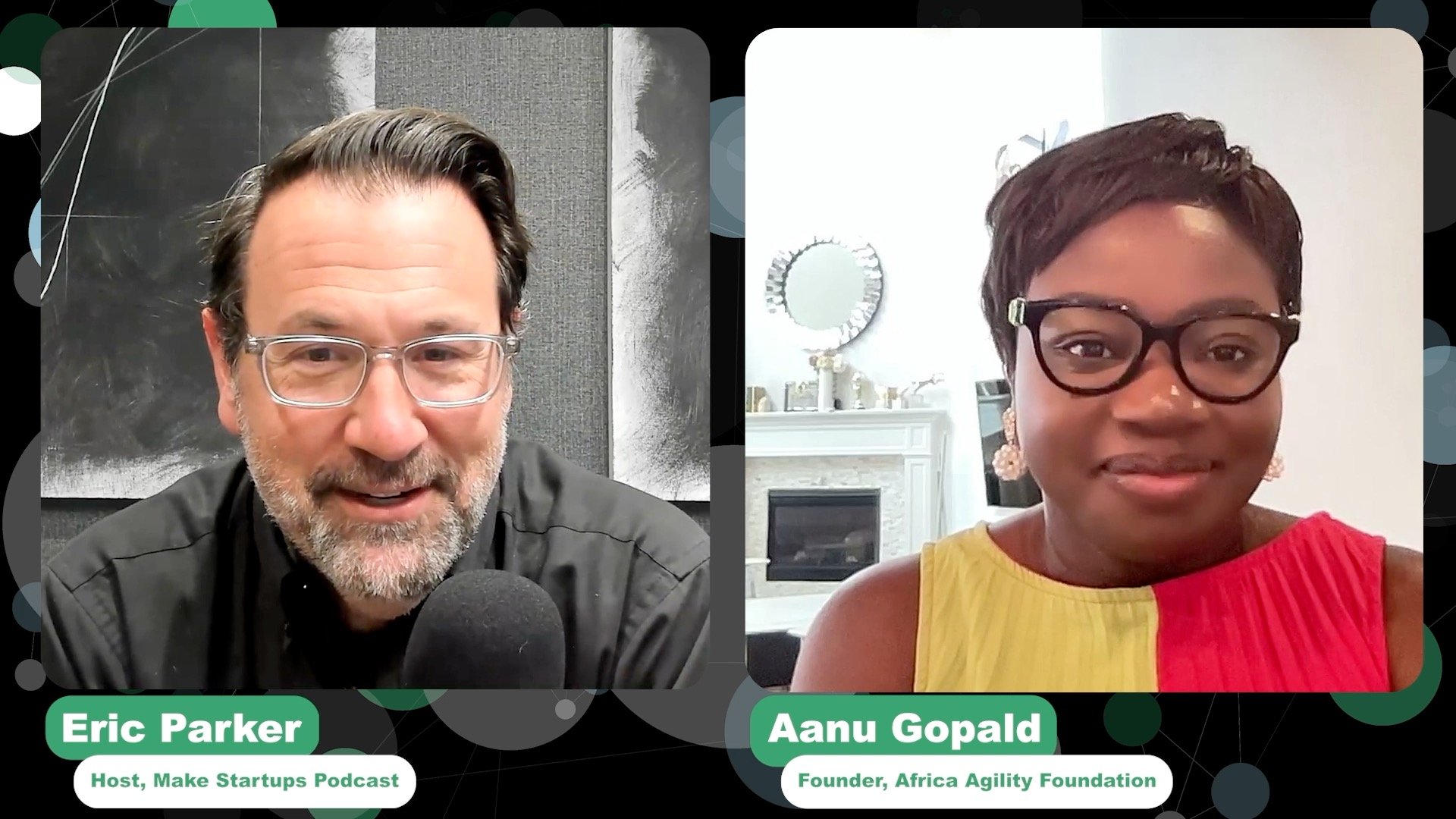
During my recent conversation with Dr. Aanu Gopald, I was struck by the incompleteness of my own perspective.
In America, we debate opportunity versus needs-based entrepreneurship. We argue about quality of life, workforce frameworks, funding cuts, and performative metrics. We may disagree about politics or public priorities, but we still operate within a society that offers some measure of public benefits and equal protection under the law. We are fortunate enough to be arguing about what it means to form a more perfect union.
In parts of Africa, and I want to stress parts, the stakes are different.
Aanu shared that when she graduated with a computer science degree, she had never even touched a computer during her studies. When she reached a final job interview, she was told she would need to trade her body to secure the role. She refused. Years later, that moment became the seed for Africa Agility.
Today, Africa Agility has supported more than 170,000 young people across 52+ countries. Their programs train women in tech, mentor founders, build pathways into employment, and address barriers like period poverty that keep girls out of school.
The organization has been almost entirely self-funded by Aanu and her husband.
When the alternative facing a young woman is not “Which company should I work for?” but “How will my family eat?”, entrepreneurship is not a trendy option. It is dignity infrastructure.
If that is true, then the standard of care in our work must rise.
We were honored to support one of Africa Agility’s IncubateH3R cohorts. Afterward, we received videos from graduating founders sharing their businesses and what the experience meant to them. I was moved, not because of what we did, but because of what they built under constraint.
There is also a capital lesson here. In the United States, a five-figure check is often questioned for its impact. In many African ecosystems, the same amount can be transformational.
This is not my story to tell.
If you believe entrepreneurship is about shifting power and expanding dignity, I invite you to hear Aanu’s story directly.
Watch or listen to the full conversation here: https://youtu.be/1KKKQKhUV1A
I’m grateful for the chance to learn from her.
Click to Watch
Learn more about Africa Agility: https://africaagility.org/
Connect with Dr. Aanu Gopald: https://www.linkedin.com/in/aanugopald/
Curious how many entrepreneurs in your own community may be operating under economic constraint? We built a Poverty & Opportunity Calculator to help ecosystem builders understand how poverty intersects with entrepreneurship locally.
Explore it here: https://www.makestartups.org/poverty-and-opportunity